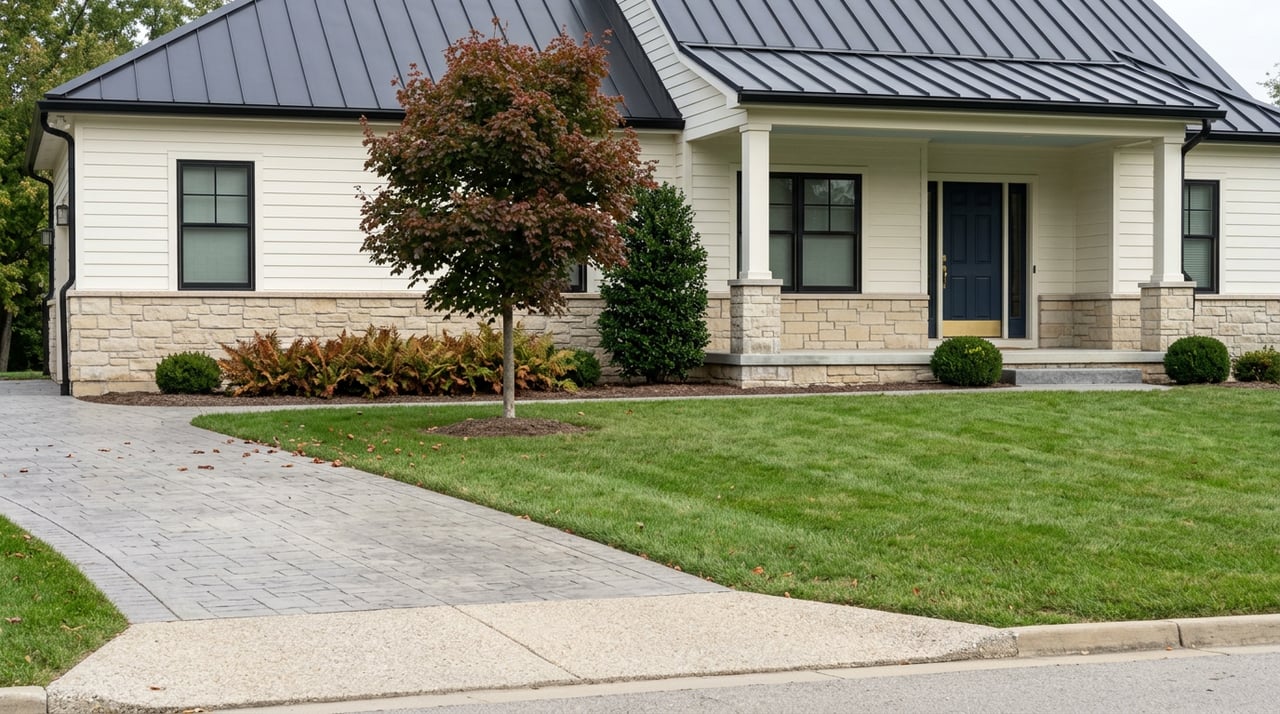
Two buyers close on identical houses the same week. Same floor plan, same builder, same $500,000 price tag, same Wilson County zip code on the envelope. One year later, their property tax bills are hundreds of dollars apart, and neither house moved an inch.
That gap has nothing to do with the reappraisal everyone in Wilson County has been talking about since spring. It has to do with a line on a map that no listing photo ever shows: whether the house sits inside Mount Juliet's city limits, inside Lebanon's, or in the unincorporated county between them.
If you're shopping Wilson County right now, that line matters more to your monthly carrying cost than the headline number that made the news.
The Gap No Listing Photo Shows
Every home in Wilson County pays the county's property tax rate. That's the floor. But step inside a city's boundary and you add that city's own rate on top, and in one specific pocket of Lebanon, a school district overlay on top of that.
Run the math on a $500,000 home, assessed at 25 percent of value under Tennessee law, which puts the taxable figure at $125,000. At the county-only rate of $1.1631 per $100 of assessed value, that's about $1,454 a year, full stop, if the home sits in unincorporated Wilson County. Cross into Mount Juliet, and the city adds its own 28 cents per $100, pushing the same house to roughly $1,804 a year, about $350 more purely for being inside city limits.
That's before Lebanon enters the picture. Lebanon's municipal rate is $0.4050 per $100, more than double Mount Juliet's, and homes inside the Lebanon Special School District boundary carry an additional 0.1786 on top of the county rate. Stack the higher city rate and the LSSD overlay together, and local tax guides that track Wilson County bills line by line put the real annual gap between a Mount Juliet home and a same-priced Lebanon-and-LSSD home at $700 to $900 a year. That's a genuine monthly cost difference that a same-priced comparison on paper will never surface.
None of that shows up in a listing description. It shows up on the first tax bill, usually mailed in October, and by then the closing has already happened.
Why the "155%" Number Made Headlines and What It Actually Means
If you've seen a local news segment about Mount Juliet property taxes this year, you've probably seen the number 155 percent. That's how much the city's municipal rate rose, from 11 cents per $100 two years ago to the 28 cents the Mount Juliet Board of Commissioners approved for the fiscal year that began July 1, 2026. FOX 17's reporting on the increase fed into an August 14 analysis from the Beacon Center of Tennessee arguing the state now leads the nation in property tax growth, and the story picked up attention because a 155 percent jump sounds alarming on its face.
Here's what that number doesn't tell you: a rate increase and a bill increase aren't the same thing, and the rate itself only tells half the story of what shows up on your October notice.
Wilson County just came off a countywide reappraisal, its first since 2021, and property values across the county rose an average of 66 percent. Under Tennessee law, a reappraisal year triggers a "certified" rate reset designed to keep the county's total tax revenue roughly flat, not to hand local government a windfall just because home values jumped. That's why Wilson County's own rate actually fell, from $1.9089 down to $1.1631 per $100 of assessed value, even in the same year property values rose by two-thirds.
Wilson County Assessor Stephen Goodall put it plainly when the new rate was announced: whether an individual bill goes up or down depends on how that specific property's value moved relative to the countywide average, not on the average itself. Mount Juliet Mayor James Maness made the same point to residents ahead of the reappraisal, telling FOX 17 that a rising appraisal doesn't automatically mean a rising tax bill.
So the 155 percent headline is real, but it describes the city's slice of the bill in isolation. The county slice moved the opposite direction. Your actual total depends on both numbers together, plus which side of the city line your specific house sits on.
The Three-Layer Stack That Sets Your Real Bill
For a buyer trying to estimate a real number before making an offer, it helps to see the layers side by side.
| Jurisdiction | Rate per $100 assessed value (2026) |
|---|---|
| Wilson County (base, all properties) | $1.1631 |
| Wilson County + Lebanon Special School District overlay | $1.3417 |
| Mount Juliet municipal add-on | $0.28 |
| Lebanon municipal add-on | $0.4050 |
| Watertown municipal add-on | $0.3435 |
A home in unincorporated Wilson County, outside any city, pays the county rate and nothing else. A home inside Mount Juliet pays county plus Mount Juliet's add-on. A home inside Lebanon pays county plus Lebanon's add-on, and if it also falls within the LSSD boundary, the school overlay stacks on top of that. Watertown sits in between, with a smaller commercial tax base than Mount Juliet but less infrastructure to fund than Lebanon.
The practical takeaway for a buyer comparing two listings at the same price: ask which jurisdiction each address actually sits in before you assume the tax lines are comparable. A real estate agent or the county assessor's parcel lookup can confirm this in minutes, and it's worth the minutes.
A Faster Clock Going Forward
One more detail that changes how buyers should think about future bills: Wilson County is moving off its five-year reappraisal cycle to a three-year cycle starting now. The last reappraisal spanned 2021 through 2025 and produced that 66 percent average jump. Goodall has said the shorter cycle is meant to catch value changes more incrementally, so future reappraisals shouldn't produce the same kind of one-time sticker shock.
That's a reasonable trade for buyers weighing long-term ownership costs. A gradual step every three years is easier to budget around than a 66 percent jump every five.
What This Means If You're Weighing an Offer Right Now
Mount Juliet's median sale price has been running in the high $500,000s to low $600,000s through mid-2026, according to RealTracs MLS data compiled by local brokerages. At that price point, the boundary question isn't a rounding error. It's the difference between a manageable annual increase and a bill that catches a household off guard at the worst possible time, right after a move.
A few things worth doing before you sign anything:
Confirm the jurisdiction on the actual parcel, not just the mailing address, since Wilson County zip codes cross city lines in ways that aren't always obvious from a listing sheet.
If you're buying a home that's just been reappraised and you believe the new value is out of line with recent comparable sales, you have a window to challenge it. The Wilson County Board of Equalization convenes each June to hear informal and formal appeals, and unresolved cases can move to the State Board of Equalization by August 1 or within 45 days of the county board's decision, whichever comes later.
If you or a parent is 65 or older and buying or already owning in Wilson County, ask about the state's Tax Freeze program, which locks a qualifying senior's bill at its current level regardless of future reappraisals, with an income threshold around $52,470 for the current cycle.
None of this is a reason to avoid Mount Juliet or Wilson County. It's a reason to run the actual numbers for the actual parcel before you compare two listings as if the tax line were identical, because on paper it often isn't.
Frequently Asked Questions
Does a higher appraisal always mean a higher tax bill? Not automatically. Wilson County's certified rate is set to offset average value increases so total county revenue stays roughly flat after a reappraisal. Whether your individual bill rises depends on how your property's value moved compared to the countywide average.
Which Wilson County cities charge an additional municipal rate? Mount Juliet, Lebanon, and Watertown each set their own city rate on top of the county rate. Unincorporated areas of the county pay only the county rate.
What is the Lebanon Special School District overlay? It's an additional rate that applies only to homes inside a specific geographic boundary within Lebanon, on top of both the county and Lebanon city rates. Homes in Lebanon but outside that boundary don't pay it.
If you're comparing Wilson County addresses right now and want a straight answer on what a specific house will actually cost to own, not just what it costs to buy, The Ville Real Estate Co. can walk the parcel-level numbers with you before you write an offer. Contact us today.
